
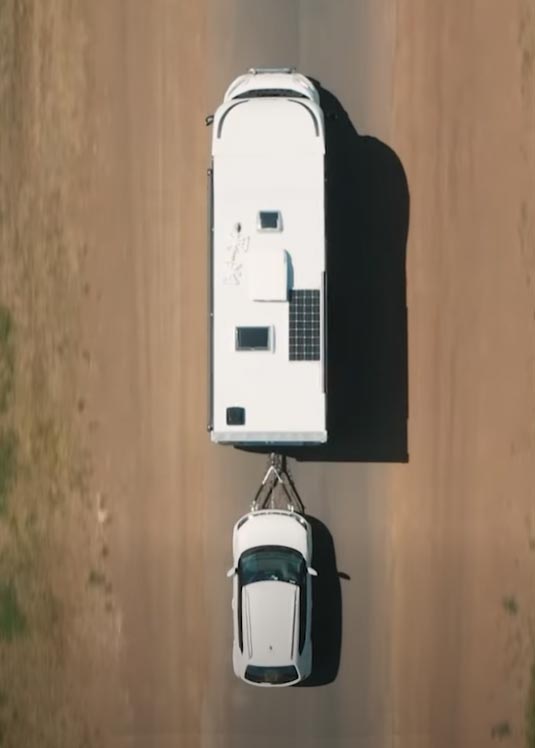

A-Frame Towing Behind a Motorhome: What You Need to Know
Travelling Australia in a motorhome offers comfort and flexibility, but once you’re set up at camp, driving a large vehicle into town or navigating tight car parks isn’t always convenient. Many motorhome owners solve this by towing a small secondary vehicle behind their motorhome using an A-Frame system; commonly known as flat towing.
Here’s what you need to understand before setting one up.
Is A-Frame Towing Legal in Australia?
Yes. A-Frame towing is legal in all Australian states and territories. However, each state may have slightly different requirements regarding engineering approval and braking systems.
All A-Frames must comply with Australian Design Rule 62 (Mechanical Connections Between Vehicles).
It’s important to note that engineering certification is not transferable. If you change the motorhome, the towed vehicle, or the A-Frame itself, certification must be redone.
Because state regulations can vary, always check the specific guidelines in your state or consult an RV compliance specialist.
What Can You Tow?
There are two key considerations:
1. Your Motorhome’s Towing Capacity
Your motorhome must be rated to tow the vehicle you intend to flat tow.
Two important weight ratings apply:
- GVM (Gross Vehicle Mass) – the maximum allowable weight of the towed vehicle
- GCM (Gross Combination Mass) – the maximum allowable combined weight of the motorhome and the towed vehicle
A common mistake is assuming the tare weight of the car determines suitability. In reality, your towbar rating must be equal to or greater than the GVM of the towed vehicle and your full combination must not exceed the manufacturer’s specified GCM.
2. The Towed Vehicle Must Be Suitable
Not all vehicles can be flat towed. Drivetrain design plays a major role in whether a car can safely be towed with all four wheels on the ground.
Always confirm suitability with an experienced A-Frame supplier or motorhome specialist before purchasing a vehicle specifically for towing.
What Equipment Is Required?
To safely flat tow behind a motorhome, you’ll typically need:
- Towbar fitted to the motorhome (with a 2″ square receiver)
- A-Frame assembly
- Baseplate fitted to the towed vehicle
- 7-pin 12V wiring connection
- Wiring integration so the towed vehicle’s lights operate correctly
- Safety cables
- Emergency breakaway system (where required)
- Drop receiver (if required to keep the A-Frame level)
The A-Frame must sit parallel to the road surface when connected. If the height difference between vehicles prevents this, a drop receiver is used to correct alignment.
Braking Requirements
All towed vehicles must have an approved braking system.
Two common systems are used:
Override braking systems
Electric brake systems
The required system depends on the GVM of the towed vehicle and your state’s regulations. Always confirm compliance before installation.
Length and Signage Rules
There are important operational limits to be aware of:
- The total vehicle combination must not exceed 19 metres.
- If the combination is over 7.5 metres and you need to straddle lanes when turning, a “Do Not Overtake Turning Vehicle” sign may be required.
- Some states require a “Vehicle Under Tow” sign; requirements vary.
Practical Considerations When Towing
When flat towing:
- The towed vehicle’s ignition must be in the correct position to disengage the steering lock.
- For keyless ignition vehicles, a specific setup sequence is usually required.
- It’s recommended to periodically start the towed vehicle during long trips to maintain battery charge and circulate engine fluids, or alternatively install a charging system.
- Reversing while connected to an A-Frame is not recommended due to limited directional control.
Insurance Considerations
Not all insurance policies automatically cover flat towing setups. It’s important to confirm with your insurer that both the A-Frame system and the towed vehicle are covered while under tow.
Final Thoughts
A-Frame towing offers motorhome owners greater flexibility and convenience once set up at camp. However, compliance, correct equipment, and proper setup are critical for safety and legality.
Before proceeding, consult an experienced A-Frame specialist and confirm all state requirements to ensure your combination is fully compliant.
Considering A-Frame Towing?
A-Frame towing is one of the most practical upgrades for motorhome touring. Once you’re set up at camp, having a smaller vehicle ready to go makes day trips, shopping runs and sightseeing far easier — without packing everything away.
The key is getting it right from the beginning. Correct vehicle selection, compliant braking, proper certification and weight calculations are all critical.
At Australian Motor Homes and Campervans, we currently have vehicles already professionally set up for flat towing on display and available for sale. Each has been prepared with the correct A-Frame system and setup considerations in mind, removing the guesswork and potential compliance issues.
If you’re considering adding a towed vehicle to your motorhome setup, speak with our team before purchasing — it can save significant time, cost and complications later.